
If you’re searching for permanent dentures, you may be looking for a more stable, long-term alternative to traditional removable dentures. In dentistry, the term “permanent dentures” can refer to several tooth replacement options, including implant-supported dentures, fixed dentures, or full-arch implant solutions that use dental implants to help secure replacement teeth.
For many patients, permanent dentures can offer better comfort, chewing ability, and confidence compared to traditional dentures. However, the right treatment depends on your oral health, jawbone volume, goals, and whether you want a removable or fixed solution.

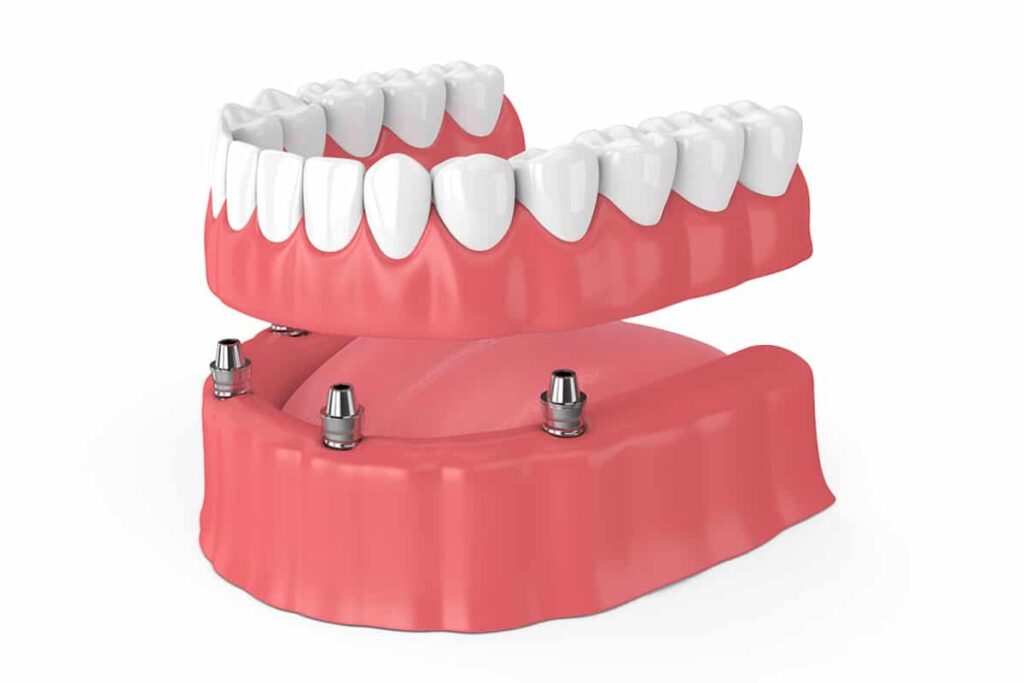
Permanent dentures are replacement teeth that are supported by dental implants. Unlike traditional dentures, which rest directly on the gums, implant-supported dentures attach to implants that are placed in the jawbone.
These implants act as anchors for the denture, helping improve stability and function. Over time, the implants fuse with the jawbone through a process called osseointegration. This helps create a stronger foundation for the denture and can support jawbone health by stimulating the bone.
Permanent dentures may be fixed in place or removable, depending on the type of treatment recommended. Some options are designed to be removed for cleaning, while others stay in place and are only removed by a dental professional.
There are a few different options people may be referring to when they use the term “permanent dentures.”
Implant-retained dentures use dental implants to help hold a removable denture in place. These are sometimes called snap-in dentures because they can attach to the implants for added stability.
This option may be helpful for patients who want more support than traditional dentures but still prefer a removable appliance for cleaning and maintenance.
Fixed implant-supported dentures are secured to dental implants and are designed to stay in place. They do not shift like traditional dentures and are not removed daily by the patient.
This type of denture can feel more stable and secure, making it easier to eat, speak, and smile with confidence.
For patients missing most or all of their teeth, full-mouth dental implants or full-arch implant solutions may be an option. These treatments use strategically placed implants to support a full set of replacement teeth.
Some patients searching for permanent dentures may actually be looking for a fixed, full-arch solution that feels closer to natural teeth than a traditional denture.
Traditional dentures sit on top of the gums and are removable. They can restore the appearance of a full smile, but they may shift, loosen, or create challenges when eating and speaking.
Permanent dentures are different because they use dental implants for support. This added support can help reduce movement, improve comfort, and create a stronger foundation for replacement teeth.
Many patients consider permanent dentures when traditional dentures feel loose, uncomfortable, or limiting. Implant-supported options can offer more stability and may make everyday activities like eating, talking, and smiling feel easier.
Permanent dentures and dental implants are closely related, but they are not exactly the same.
Dental implants are small posts placed in the jawbone to replace missing tooth roots. Permanent dentures use dental implants to support a larger prosthesis, such as a full arch of replacement teeth.
For example, a patient missing all of their upper or lower teeth may not need one implant for every missing tooth. Instead, a dentist may use a smaller number of implants to support a full denture or full-arch restoration.
This is one reason implant-supported dentures can be a practical option for patients who want a more stable solution than traditional dentures.
Permanent dentures can offer several benefits for patients who are missing many or all of their teeth.
Because permanent dentures are supported by dental implants, they are less likely to slip or move while eating, speaking, or smiling. This can help patients feel more comfortable and confident throughout the day.
Traditional dentures can sometimes make it difficult to enjoy certain foods. Implant-supported dentures provide a stronger foundation, which may improve chewing function and allow patients to eat with more confidence.
Loose dentures can cause clicking sounds or movement while speaking. Permanent dentures are held in place more securely, helping reduce these concerns.
Dental implants stimulate the jawbone, which can help reduce the bone loss that often occurs after teeth are missing. This is one of the major differences between implant-supported dentures and traditional dentures.
With proper care, permanent dentures can be a long-lasting tooth replacement option. Maintenance, regular dental visits, and good oral hygiene all play an important role in protecting the health and function of the implants and prosthesis.
Permanent dentures can be an excellent option for many patients, but there are also some factors to consider.
Because permanent dentures use dental implants, treatment involves oral surgery. Dental implant surgery is commonly performed, but it still requires careful planning, healing time, and proper aftercare.
Some discomfort, swelling, or tenderness may occur during recovery. Your dental team will provide instructions to help support healing and reduce the risk of complications.
Permanent dentures are typically more expensive than traditional dentures because they involve dental implant placement, surgical planning, and a more advanced restoration.
However, many patients consider the investment worthwhile because implant-supported dentures can offer improved stability, function, and long-term value.
Some patients may need additional treatment before getting permanent dentures. For example, patients with significant jawbone loss may need bone grafting or other advanced treatment planning before implants can be placed.
A consultation is the best way to determine which options may be available.
The cost of permanent dentures can vary depending on several factors, including:
Because every patient’s needs are different, the best way to understand the cost is to schedule a consultation. During your visit, Dr. Lampee can evaluate your oral health, discuss your goals, and explain which treatment options may be appropriate.
Jawbone volume is an important part of dental implant treatment. Since permanent dentures rely on implants for support, the jawbone needs to provide a strong foundation.
When teeth are missing for a long time, the jawbone can begin to shrink because it is no longer being stimulated by tooth roots. Traditional dentures do not replace tooth roots, so they do not provide the same type of bone stimulation as dental implants.
If you have been told you have bone loss, you may still have options. Some patients may benefit from bone grafting or advanced implant planning. A detailed consultation can help determine what type of permanent denture or full-arch implant solution may be possible.
Permanent dentures may be worth considering if you:
The right option depends on your oral health, jawbone structure, bite, lifestyle, and goals. Some patients may prefer removable implant-supported dentures, while others may want a fixed solution that stays in place.
Traditional dentures can restore the look of a smile, but they may not provide the same comfort or function as implant-supported options. Since they rest on the gums, traditional dentures can become loose over time as the jawbone changes.
This can lead to slipping, sore spots, difficulty eating, or feeling self-conscious when speaking and smiling.
Permanent dentures are designed to provide more support by connecting to dental implants. This can make them feel more secure and natural in daily life.
Choosing the right tooth replacement option is a personal decision. Permanent dentures, implant-supported dentures, and full-mouth dental implants each offer different benefits depending on your needs.
At Dr. Lampee Dentistry, Dr. Heath Lampee can help you understand your options and determine whether permanent dentures may be right for you. During your consultation, he can evaluate your jawbone, oral health, bite, and goals to recommend a treatment approach designed around your smile.
If you are ready to explore a more stable alternative to traditional dentures, contact Dr. Lampee Dentistry in Beaverton, OR, to schedule your appointment today.

Are permanent dentures actually permanent?
Some permanent dentures are fixed in place, while others are removable but secured by dental implants. The right option depends on your treatment plan and whether you prefer a fixed or removable solution.
Are permanent dentures removable?
They can be. Some implant-supported dentures are removable for cleaning, while fixed implant-supported dentures stay in place and are only removed by a dental professional.
Do permanent dentures use dental implants?
Yes, most permanent denture options use dental implants to help support or secure the denture. The implants act as anchors, giving the denture more stability than a traditional removable denture.
Are permanent dentures better than regular dentures?
For many patients, permanent dentures offer better stability, comfort, and chewing ability than traditional dentures. However, the best option depends on your oral health, jawbone volume, budget, and goals.
How long do permanent dentures last?
Permanent dentures can be long-lasting with proper care, regular dental visits, and good oral hygiene. The lifespan depends on the type of restoration, the materials used, and how well the implants and prosthesis are maintained.
Can I get permanent dentures if I have bone loss?
Some patients with bone loss may still have options, but they need a detailed evaluation. Bone grafting or advanced implant planning may be recommended depending on the amount of bone available.
What is the difference between permanent dentures and full-mouth dental implants?
Permanent dentures often refer to implant-supported dentures that replace a full arch of teeth. Full-mouth dental implants may refer to a more advanced fixed solution that uses implants to support a full set of replacement teeth. A consultation can help determine which option is better suited to your needs.